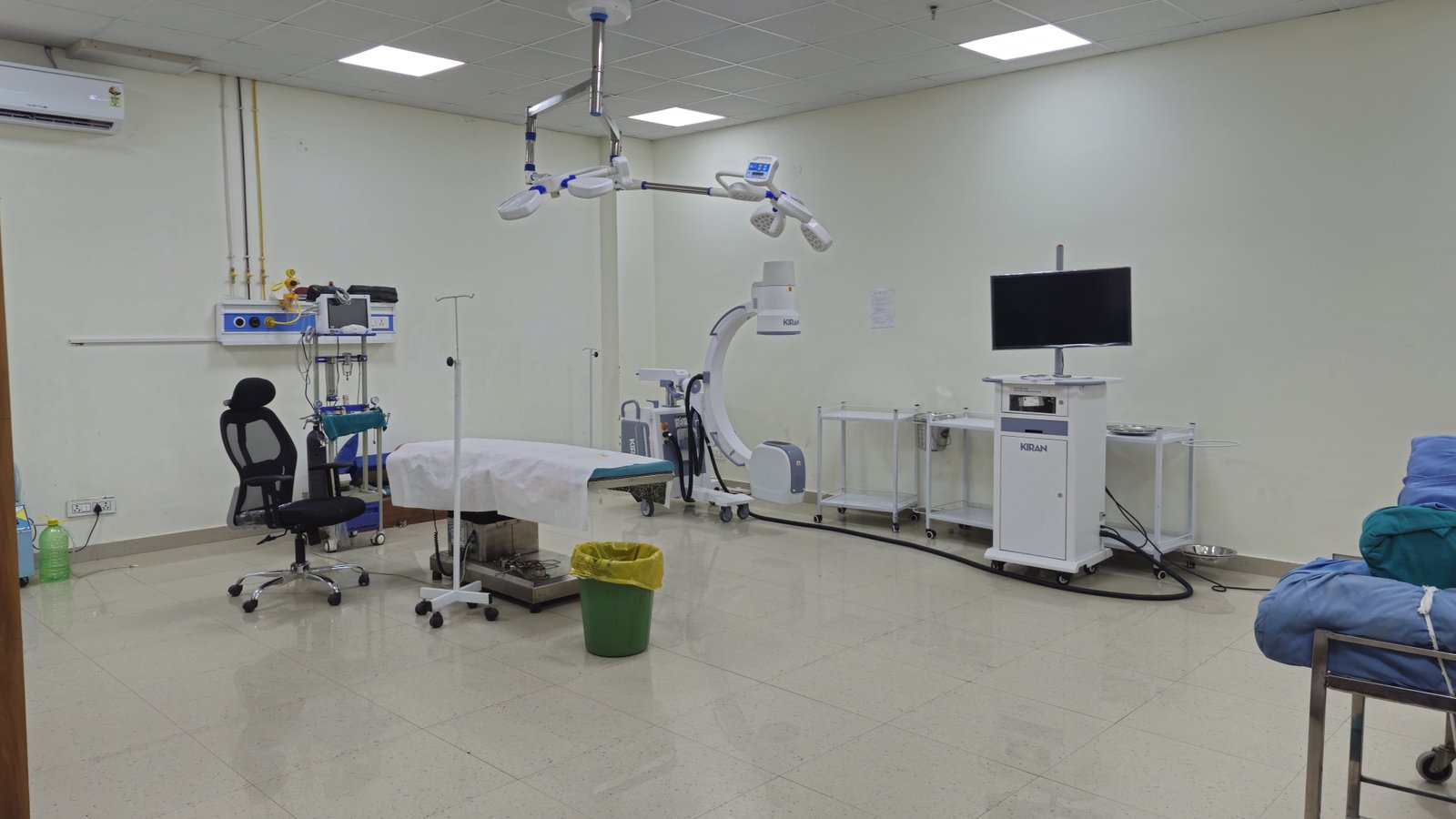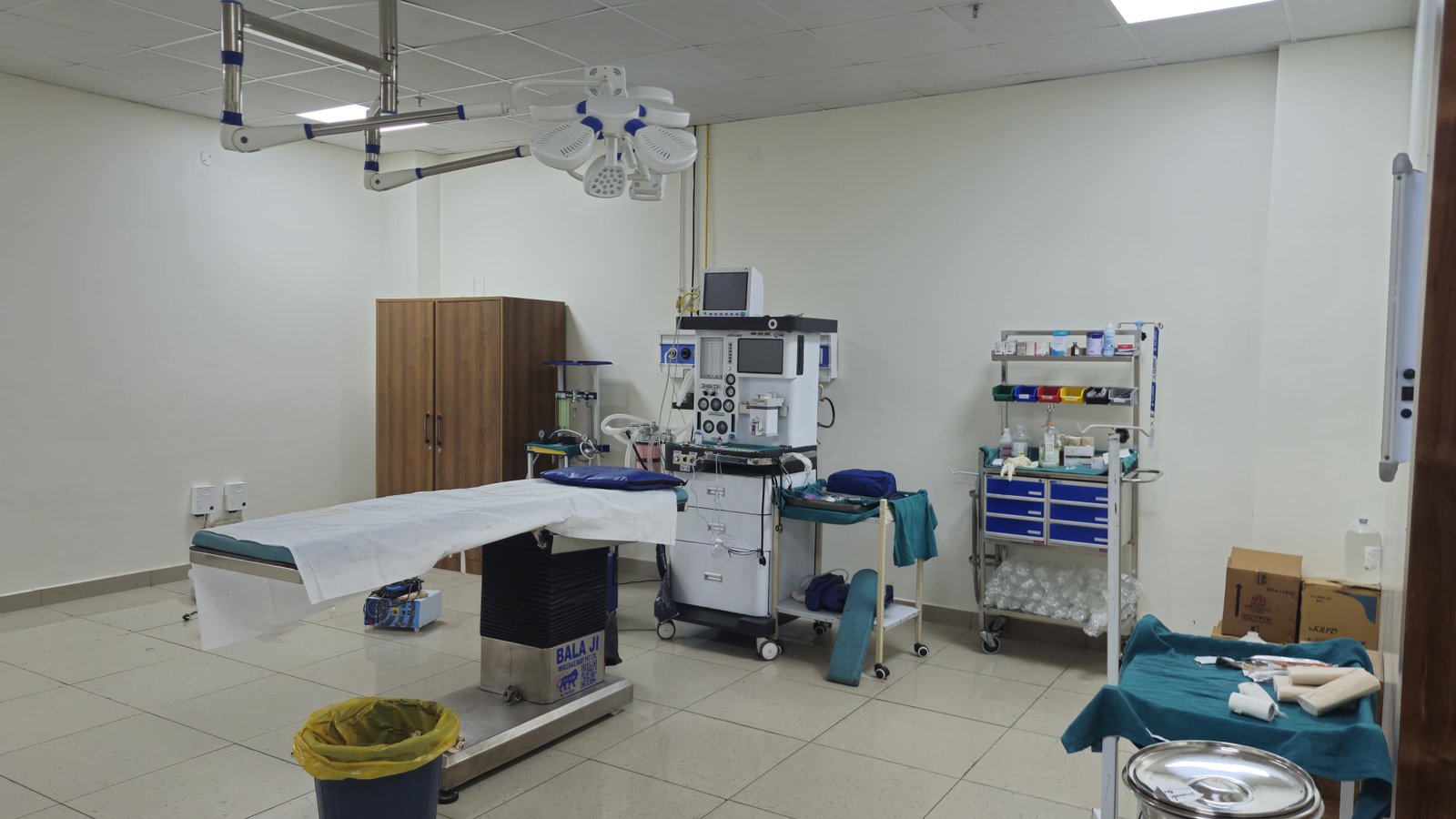

We have fully functional operation theatre (OT) within our hospital where surgical procedures are performed. It is a critical component of our hospital, providing a controlled environment where surgical procedures can be performed safely and efficiently to improve patient outcomes and quality of life. Here are some key aspects of operation theatres:
Sterile Environment: Operation theatres are maintained under strict sterile conditions to minimize the risk of infection during surgical procedures. This includes specialized air filtration systems, sterile surgical attire for the surgical team, and rigorous cleaning protocols.
Equipment and Instruments: Operation theatres are equipped with a wide range of surgical instruments, medical devices, and equipment necessary for performing various types of surgeries. This includes surgical lights, anesthesia machines, surgical tables, and monitors to track vital signs.
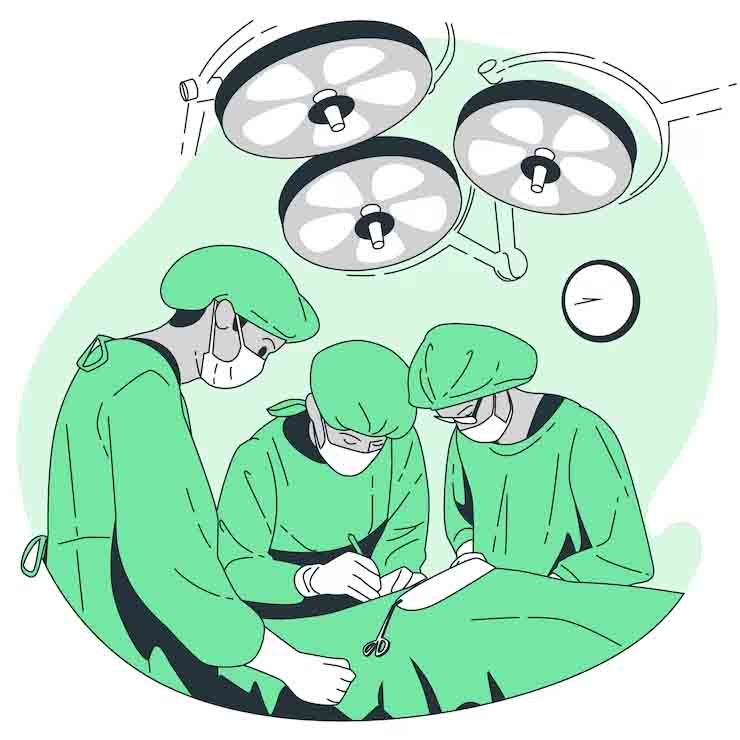
Surgical Team: The surgical team consists of highly trained healthcare professionals who work together to perform surgeries safely and effectively. This typically includes surgeons, surgical assistants, nurses, anesthesiologists, and surgical technologists.
Preparation and Setup: Before each surgery, the operation theatre is prepared and set up according to the specific requirements of the procedure. This may involve arranging surgical instruments, ensuring proper lighting and ventilation, and confirming that all necessary equipment is in working order.
Anesthesia Administration: Anesthesiologists or nurse anesthetists are responsible for administering anesthesia to the patient, ensuring they are unconscious and pain-free throughout the surgery. They also monitor the patient's vital signs and adjust anesthesia levels as needed.
Surgical Procedure: During the surgery, the surgical team works collaboratively to perform the procedure according to established protocols and best practices. Surgeons use precision instruments to perform the necessary incisions, manipulations, and repairs while the rest of the team provides support and assistance as required.
Postoperative Care: After the surgery is completed, the patient is transferred to a recovery area within or adjacent to the operation theatre. Here, they are closely monitored by medical staff as they emerge from anesthesia and begin their recovery process.